I'm Ben! 👋




Role
Senior product designer at Element AI, 2018 to 2019
Team
Element AI’s insurance solutions team, with solution strategists and engineers, working with the insurer’s underwriters and management
Platform
Standalone web platform for commercial underwriters, connected to the insurer’s application data
Summary
Our insurance partner couldn’t process commercial underwriting requests fast enough, and every application left waiting was business at risk. I shadowed their underwriters, argued for a standalone platform connected to their data, and designed a step-by-step workspace where the AI handles routine decisions and shows underwriters exactly where it needs them. The result was uPartner, a workspace that keeps the underwriter in charge of the decision and lets management tune how much of each step runs on its own.


Element AI partnered with an insurer that wanted AI to help its commercial underwriting team. The team couldn’t process all of its underwriting requests in time. Brokers send the same application to several insurers and the first to answer often wins, so every application in the queue was a business opportunity at risk.
The problem wasn’t skill. Management trusted their underwriters and their decisions, but they couldn’t hire and train new ones fast enough to keep up. They wanted to keep a similar workflow and make no compromise on the quality of decisions.
I joined the insurance solutions team for this project because of my experience turning complex problems and regulatory requirements into clear interfaces. Two constraints shaped everything that followed. The solution had to scale, so that a growing share of applications could be handled fully or partly by AI. It also had to be easy to tune over time as risk appetite or market conditions changed.

Insurance was a new domain for me, so I started by shadowing underwriters at work. I watched how they evaluated an application, what they looked at first and what made them stop and look closer.
Their software was the surprise. It came from large vendors that couldn’t adapt to this insurer’s needs. Simple tasks meant moving between screens and retyping information that should already have been there. Management had described the throughput problem accurately, but none of our conversations with them had mentioned the tools.
That changed what we set out to do. A better workflow would help underwriters even without AI, and it would give the AI a better place to live. One principle also came out of these early conversations: the human stays at the center of every decision. In commercial coverage, a single wrong call can mean very large losses for the insurer.

The first idea was to add AI features to the insurer’s existing tools. After the shadowing sessions I argued against it, because those tools were too rigid to build on. We opted for a standalone platform for underwriters, connected to the insurer’s existing application data streams.
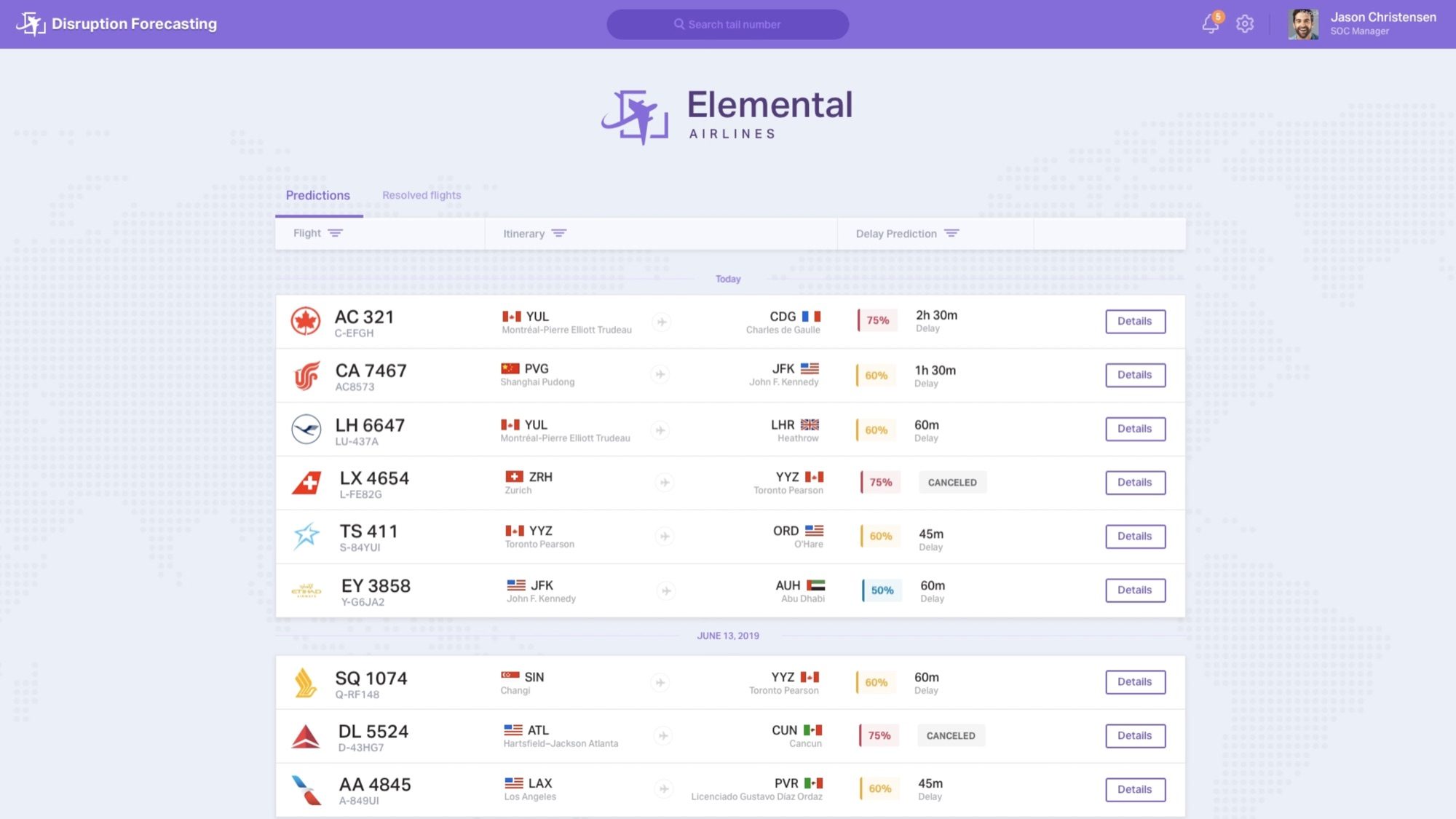
uPartner became the underwriters’ marketplace for inbound applications from all brokers. Instead of a plain inbox, the overview showed every application and the step where it had stopped: accepted by the AI model, rejected, or waiting for an underwriter’s review. The AI’s part in the work was visible from the first screen.
This put underwriters’ expertise where the model couldn’t process an application on its own, and left the routine applications to run through automatically.

Each application moves through five steps: submission, segmentation, assignment, risk assessment and coverage. A dark rail on the right shows which steps the AI decided and which ones need an underwriter to verify. When a step needs a person, automatic processing pauses until they confirm or modify it.
Comparing a new application against past ones was one of the slowest parts of the job and could take an underwriter hours. In uPartner, the AI finds similar applications and shows them beside the current one, with the package or risk decision and the date the policy was contracted. The underwriter can adjust coverage with those references in view.
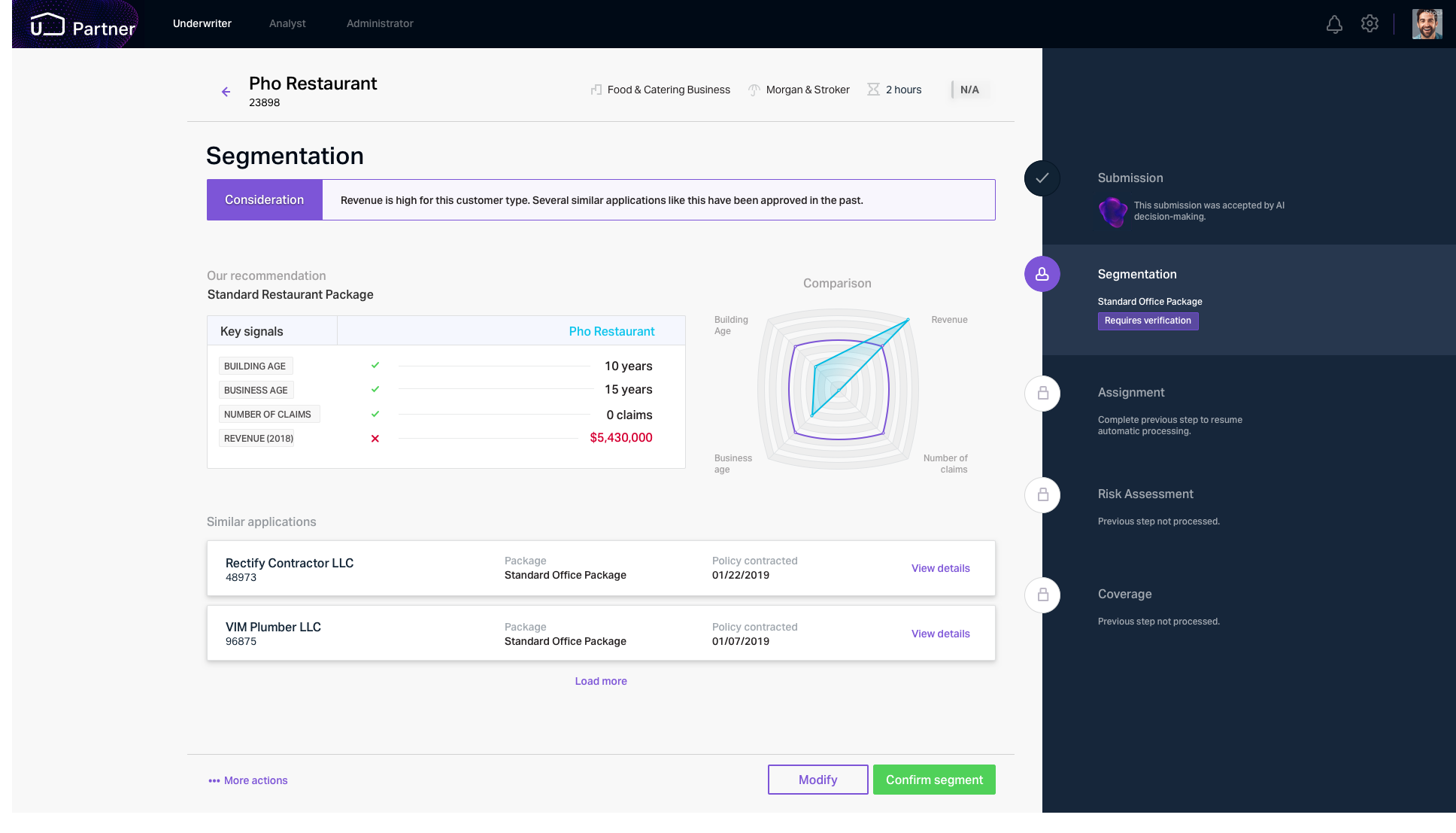
Segmentation. The AI recommends a package and explains its signals, and the step waits for an underwriter to verify it.
At the coverage step, the coverages with low confidence rise to the top under “Requires verification”. The coverages the AI determined on its own sit below, already decided. Management can also change how each step is processed, which gives them control over automatic treatment as their needs change.
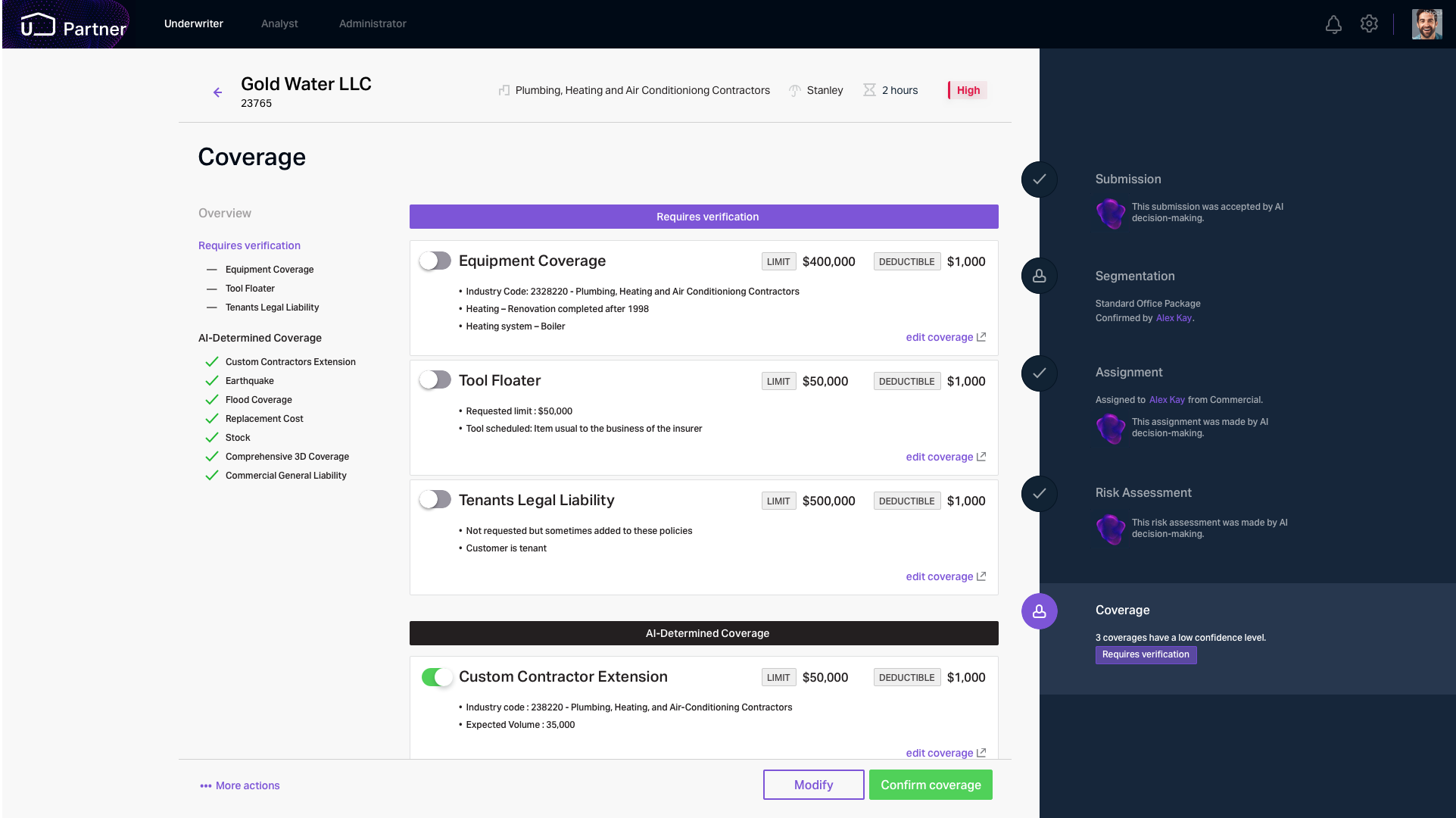
Coverage. Three coverages need an underwriter, and the rest arrive already decided.
The idea behind the work
Put people where the model is least sure.
Automation handled the routine applications, and each step told underwriters what the AI had decided and where their judgment was needed.

Before designing anything, I shadowed underwriters to see how they evaluated applications and where they got stuck.
Shadowing surfaced the problem with their vendor software, which management had not raised.

I pushed back on adding AI to the existing tools and made the case for a dedicated workspace connected to the insurer’s data.

The step rail, the “Requires verification” flags and the similar applications let underwriters see what the AI decided and confirm or modify it.

Fix the workflow before adding the model
We were brought in to add AI, but some of the most useful design work fixed how underwriters already worked.

Control over automation builds trust
Letting management tune each step meant they could start cautious and widen automation on their own timeline.
Credits: designed with the Element AI insurance solutions team and our insurance partner’s underwriting team.