I'm Ben! 👋




Role
Product and design manager. Owned the roadmap and led design
Team
Two designers and about eight engineers
Platform
Customer mobile web, in-store tablet, web back office
Summary
When a customer leaves their car for service, they often drive away in a loaner, and every loaner runs on an agreement. In 2020 that agreement was a printed form, a shared pen and a separate payment terminal. Over five years I led its redesign, one step of the rental at a time, until the whole agreement lived on the customer’s phone and the advisor’s screen.

When a loaner goes out, the customer signs an agreement. When it comes back, someone records the mileage, checks the fuel, looks for damage, charges for anything missing and closes the agreement. Across dozens of cars at a busy dealership, that meant paper forms, typing and mistakes.
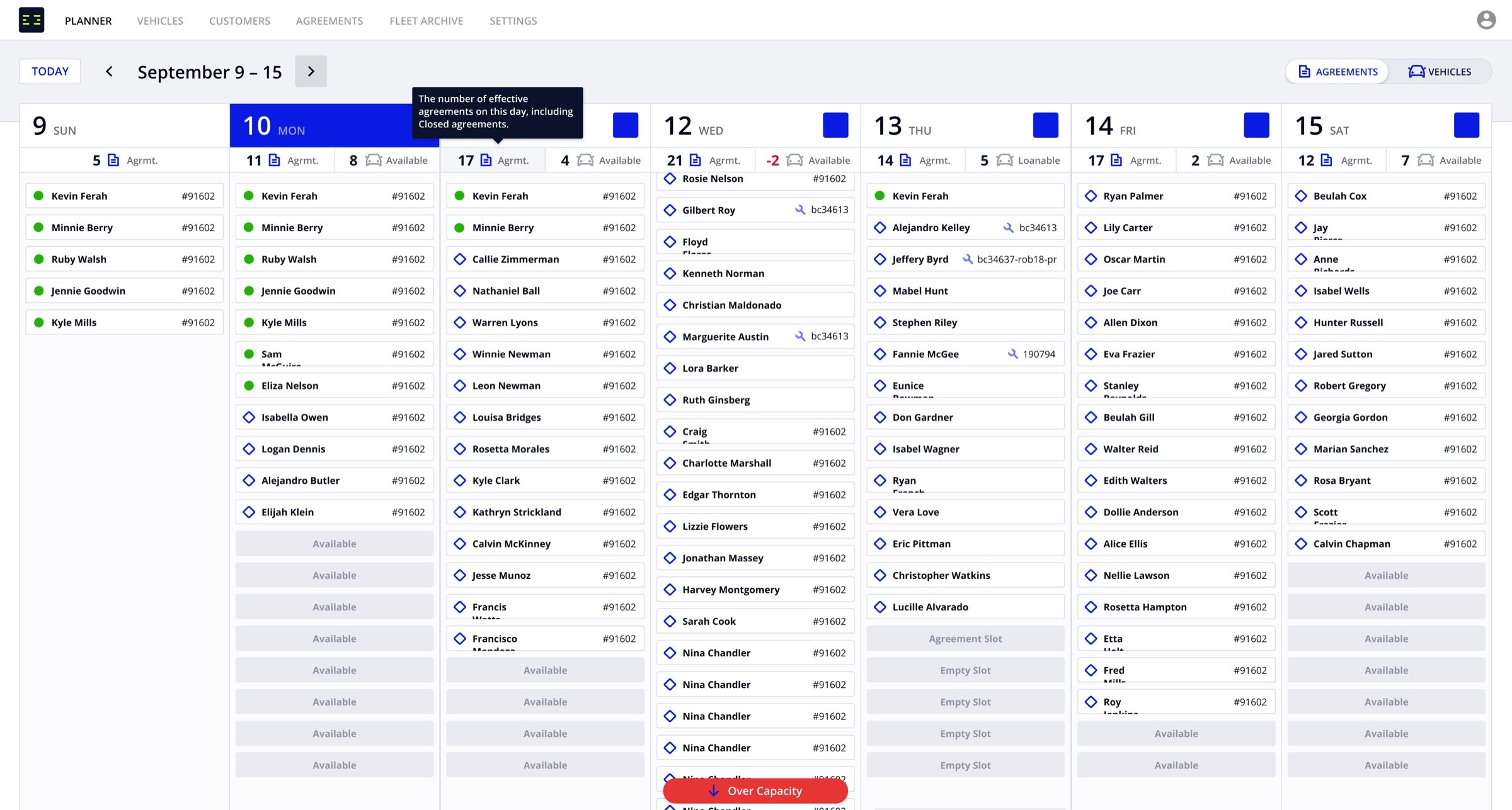
In the first version of Fleetlane, the agreement was one long form, and charges were a small table at the bottom with a “Pay charges” button. The amounts were typed in, and the payment happened on a separate terminal, if it happened at all.
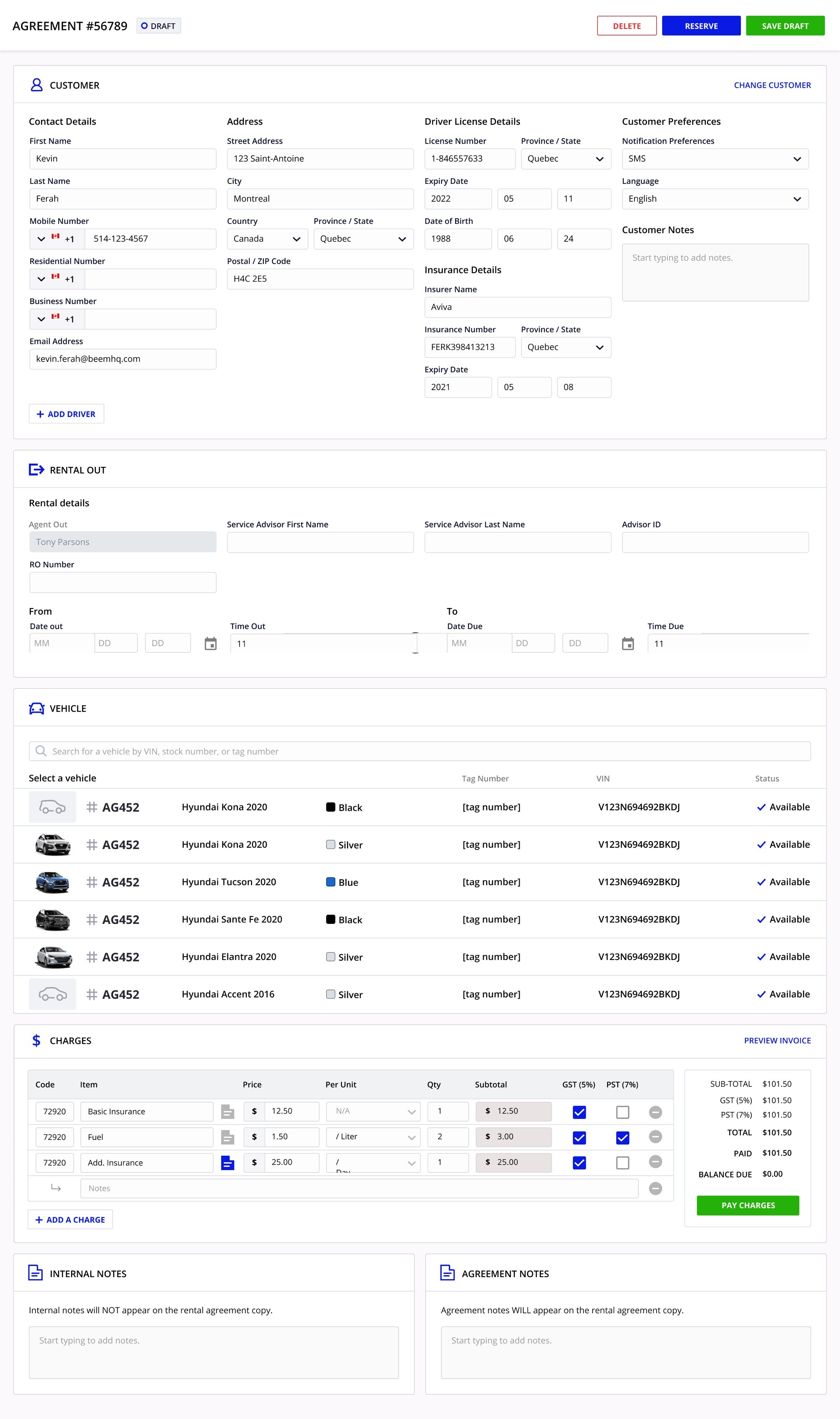
Where it started, around 2020: one long form, every field typed by the advisor at the counter.
I visited dealerships and shadowed service advisors at the counter. An advisor juggles phone calls, check-ins and technician questions at once. Anything that added a step was ignored, and anything that saved thirty seconds was adopted on the spot.
That explained both problems. Customers waited at the counter because every agreement was typed and signed there. And fuel charges went uncollected because working one out, walking to the terminal and catching the customer before they left took longer than letting it go.
Then COVID hit, and dealerships wanted no shared pen and no shared counter at all.

When COVID hit I moved e-signatures and self check-in to the top of the roadmap, and both shipped in 2020. The dealer sends the agreement by email or text. The customer reviews it on their phone, initials, signs, gives consent and gets a copy back. In the store, the same agreement opens on a tablet the advisor hands over. On the dealer’s side, the agreement shows whether the signature is pending or received.
Self check-in let the customer fill in their own details before arriving. The advisor’s job changed from typing to confirming, which is how opening an agreement went from about 3 minutes to about 30 seconds.
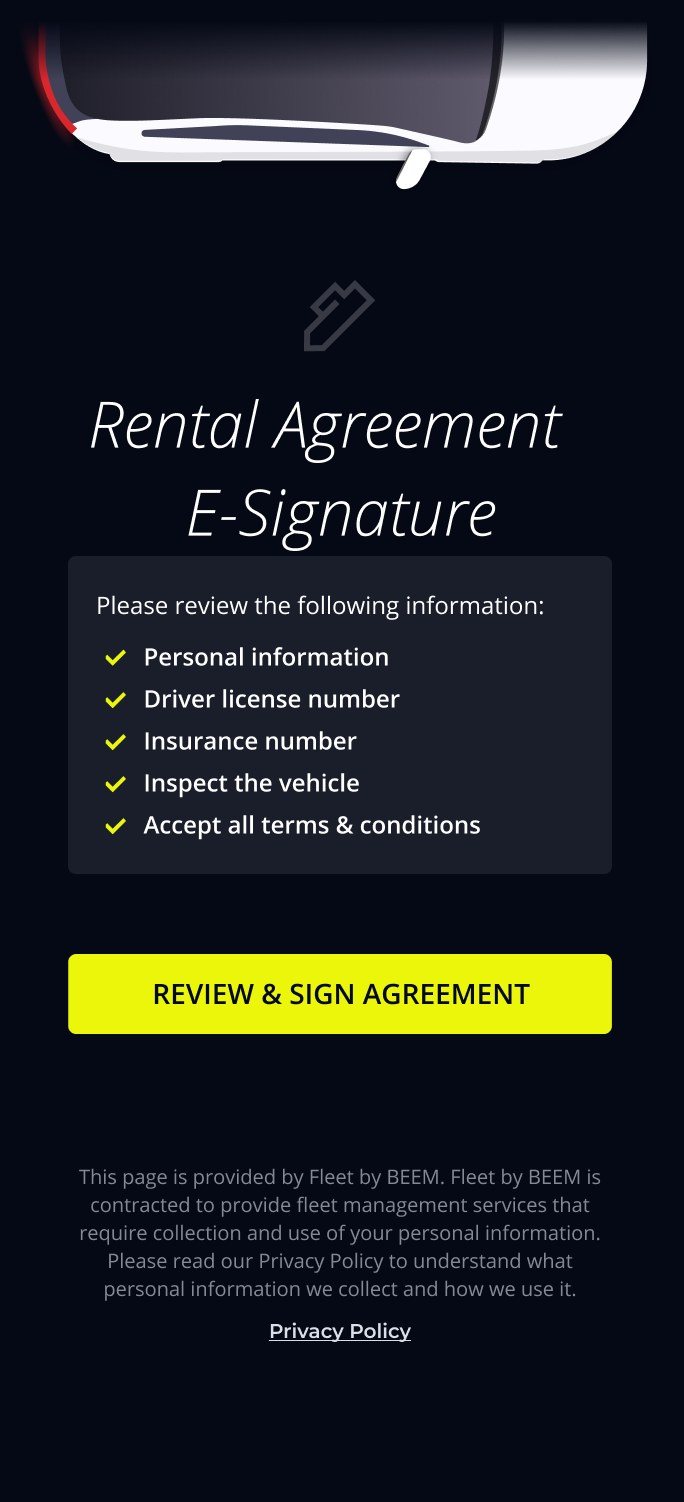
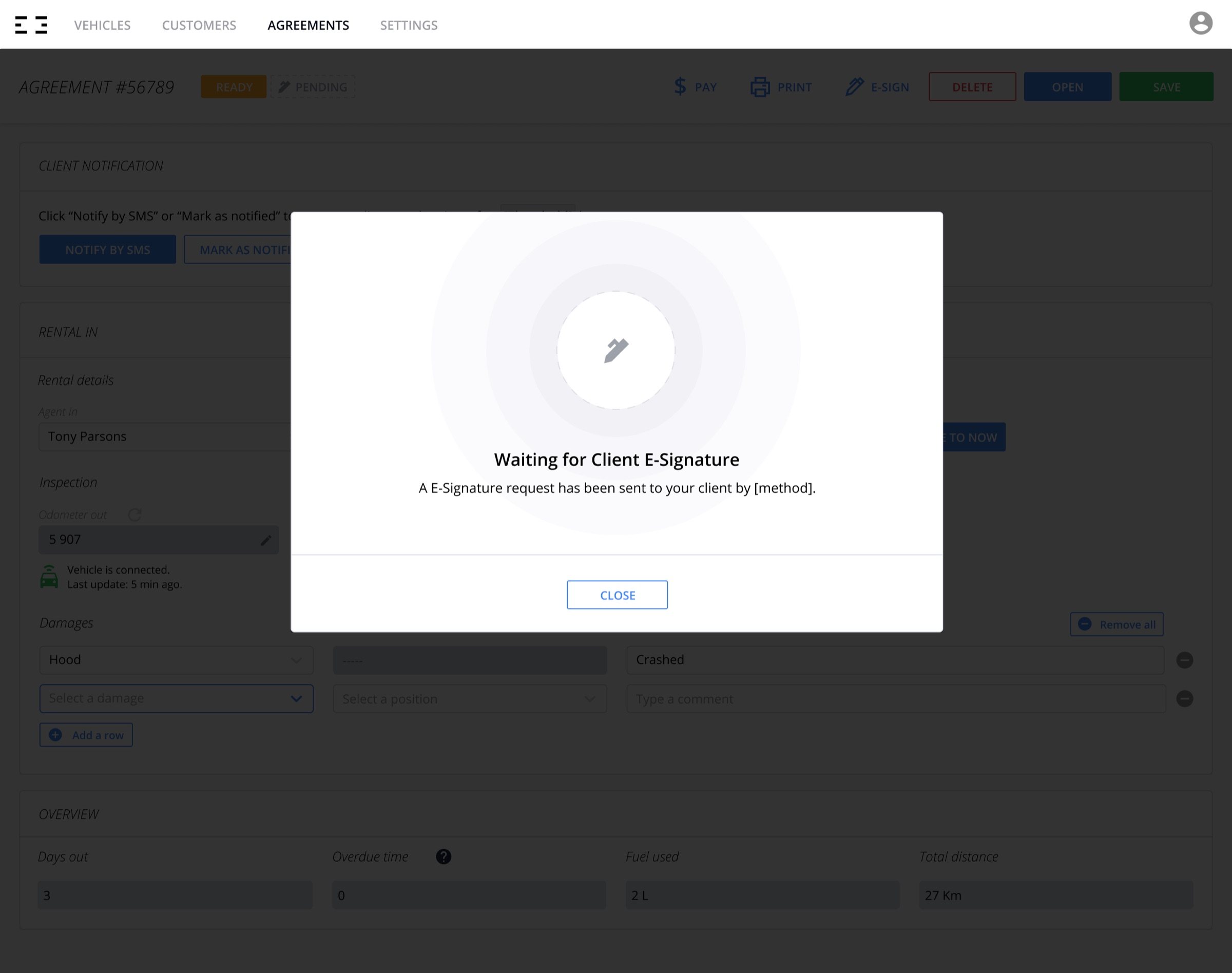
The customer signs on their phone; the advisor sees the agreement waiting for the signature. The first customer screens still carried the product’s earlier name, Fleet by BEEM.

With the pen gone, the money was the next thing left at the counter. I pushed to make payments part of the product.
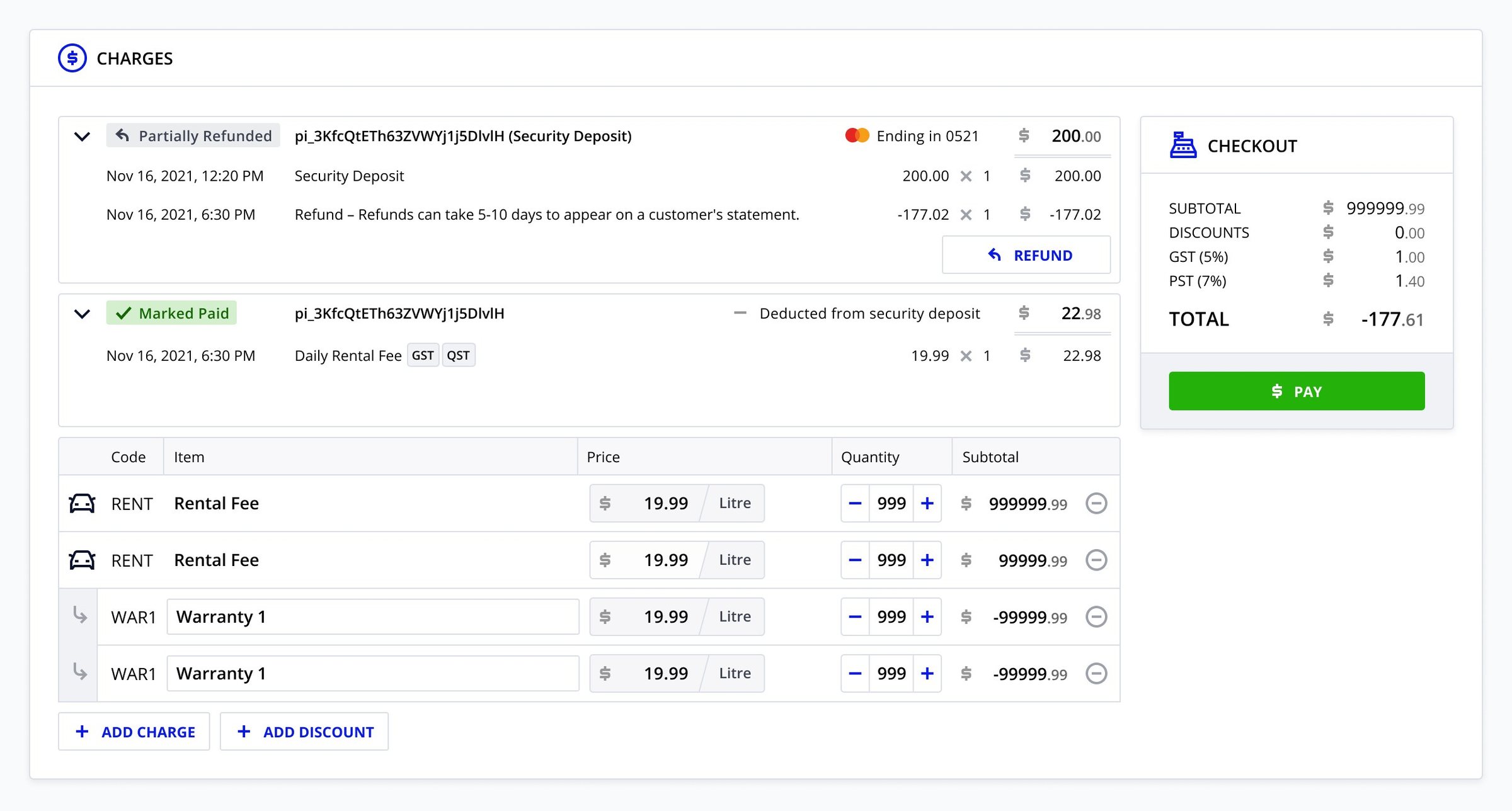
Mileage and fuel come from the telematics devices already in the vehicle, marked “verified by telematics”, with a manual override when the advisor needs one. Charges are worked out from that data. Dealerships set up their own charges once (fuel by the litre, extra days, tolls, damage), each with the right Canadian taxes, so the advisor never works out a tax. The card is held when the agreement opens, and the agreement shows where the balance stands against that deposit.
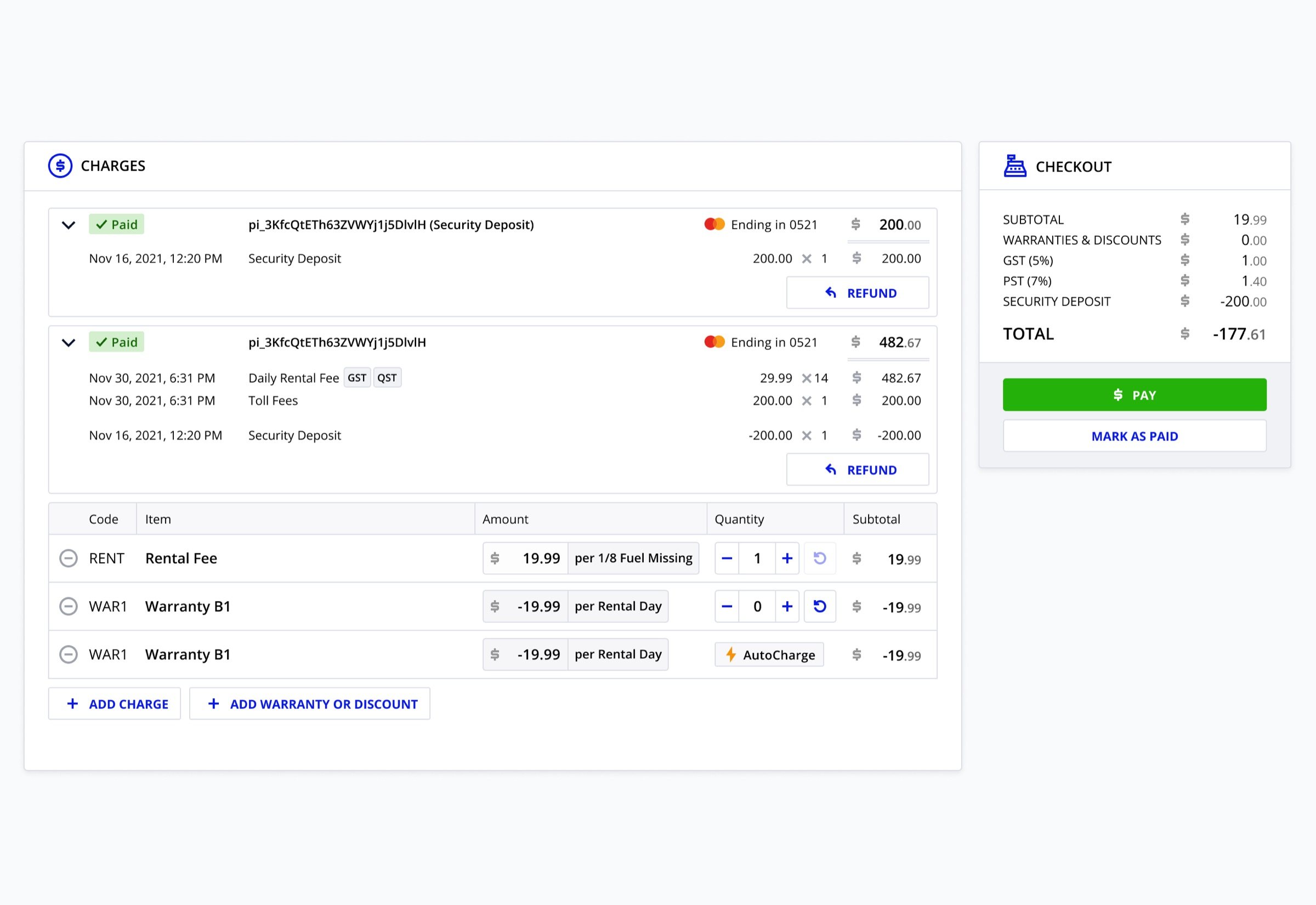

Left, charges worked out at return, with the balance against the deposit. Right, the receipt the customer gets once they pay in the app.
Later iterations followed what dealers ran into. Not every payment goes through a card, so Mark as paid records the method (on the repair order, cash, internal), and the agreement keeps a ledger of every transaction. Warranties and discounts sit on the same charge list for when an OEM or the dealership covers the cost. From February 2023, a weekly email listed agreements closed with a balance due, so nothing owed slipped through.
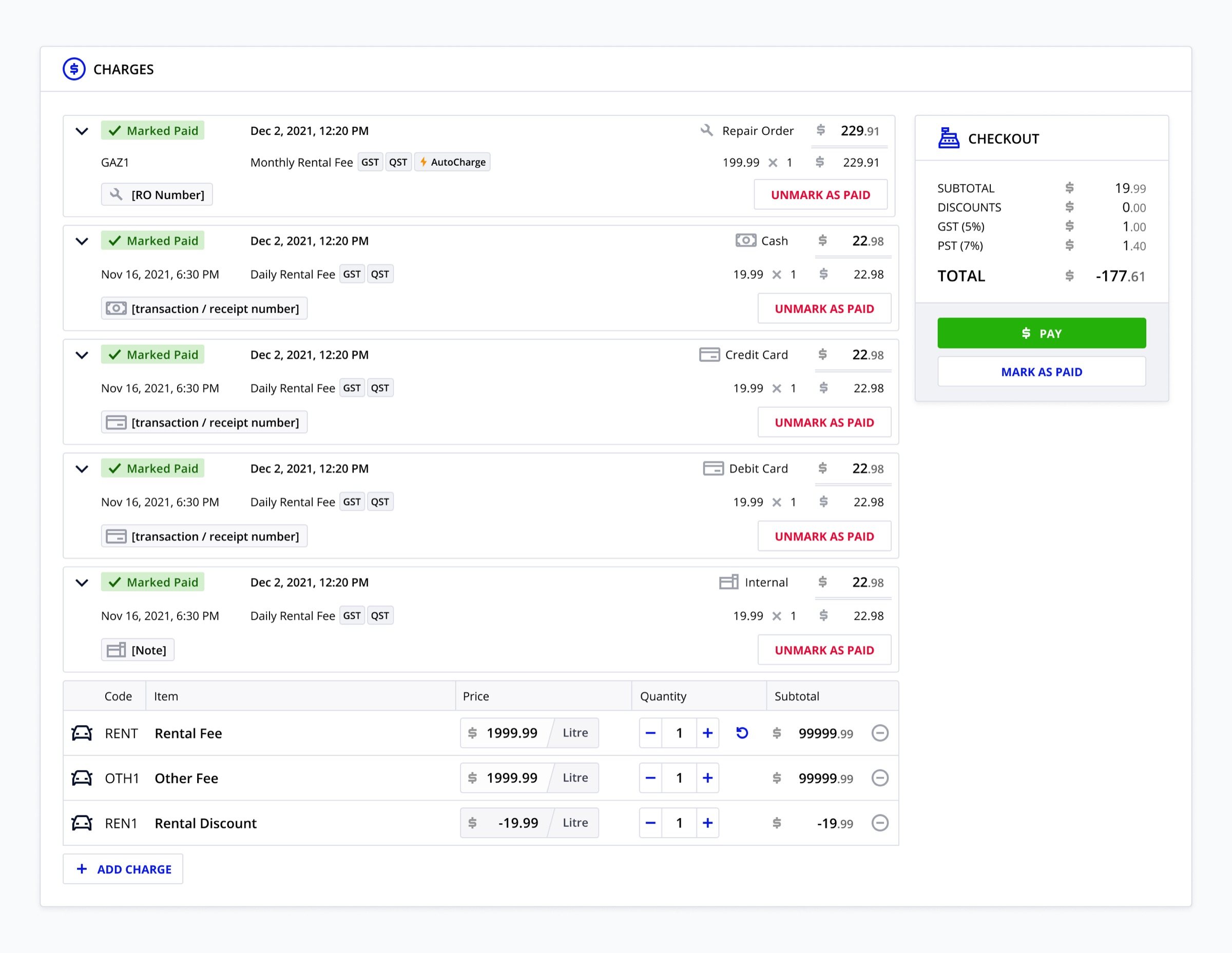
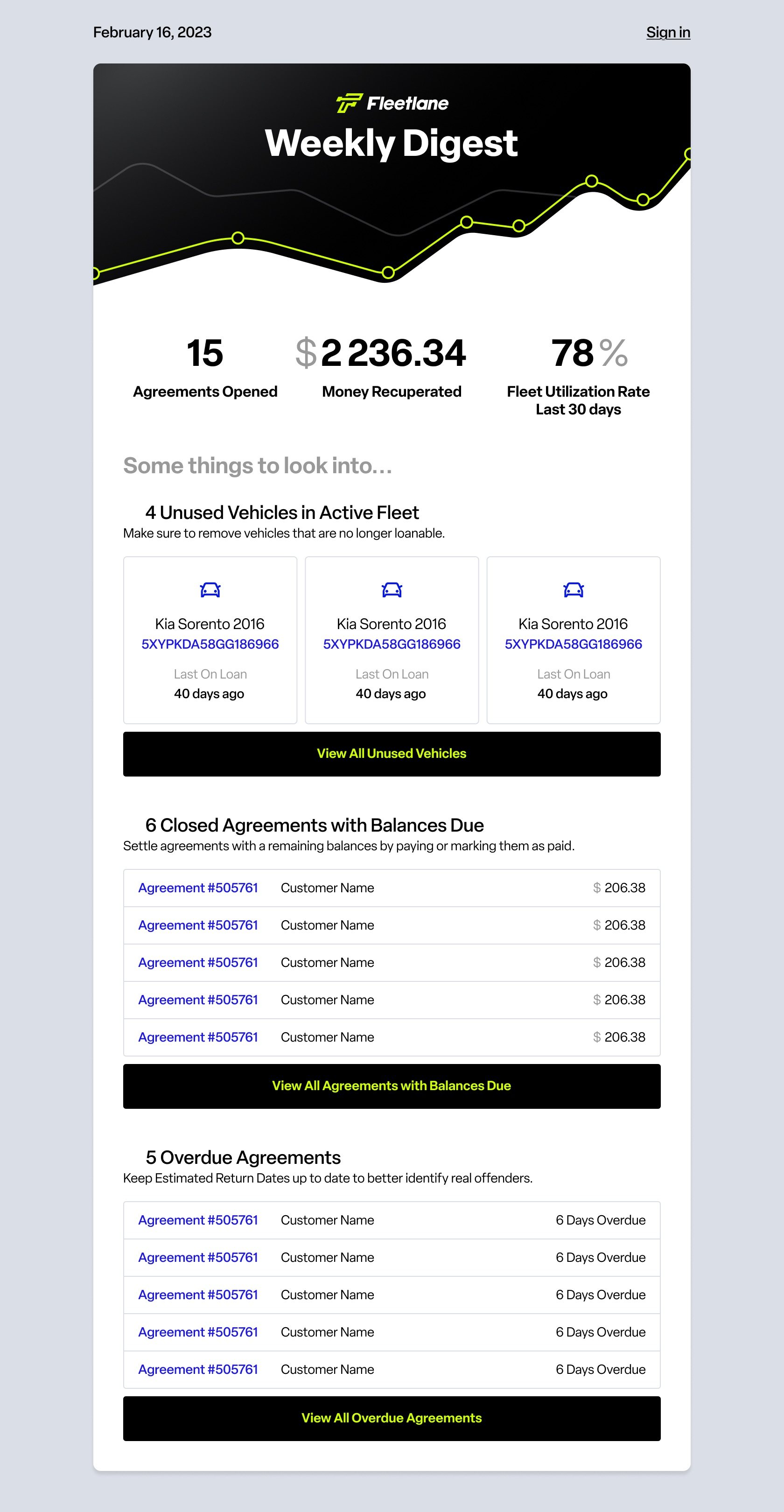
Left, every transaction on the agreement, whichever way it was paid. Right, the weekly digest from 2023.

In 2024 we added a signature at return as well as at departure. The header gets a Sign menu with e-signature or paper, and a setting lets a dealership require a signature before an agreement can close. When a customer refuses to sign, the advisor records that they declined, with a reason, and the agreement can still close.
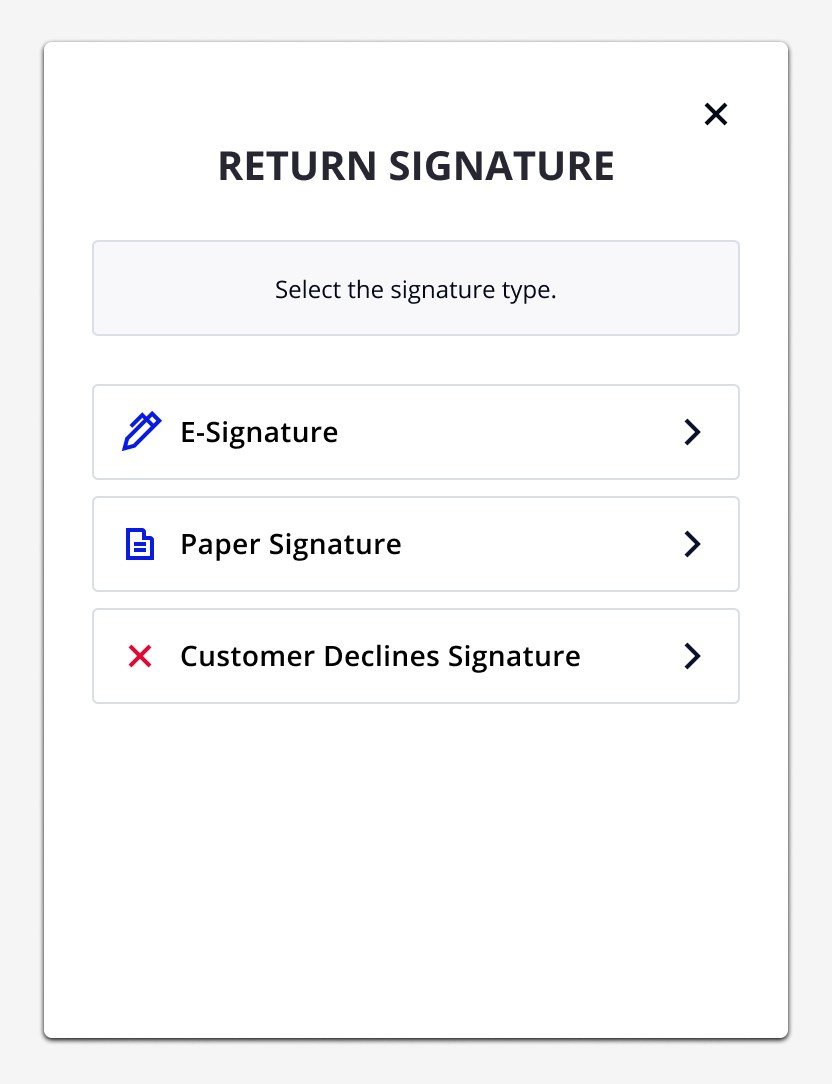
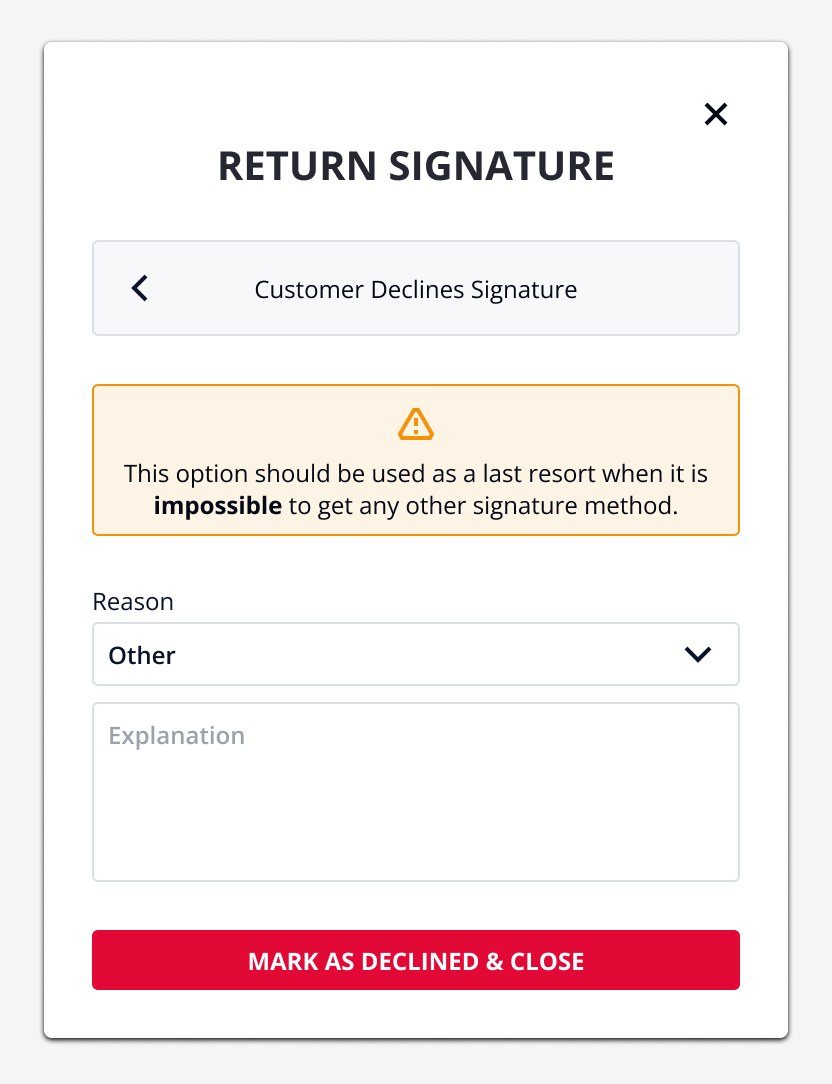
By 2025 Fleetlane served dealer groups, and they asked for an agreement to be billed to one of the dealership’s own departments or to a third party. It shipped in mid 2025, and collected payments show up in the dealership’s dashboards.
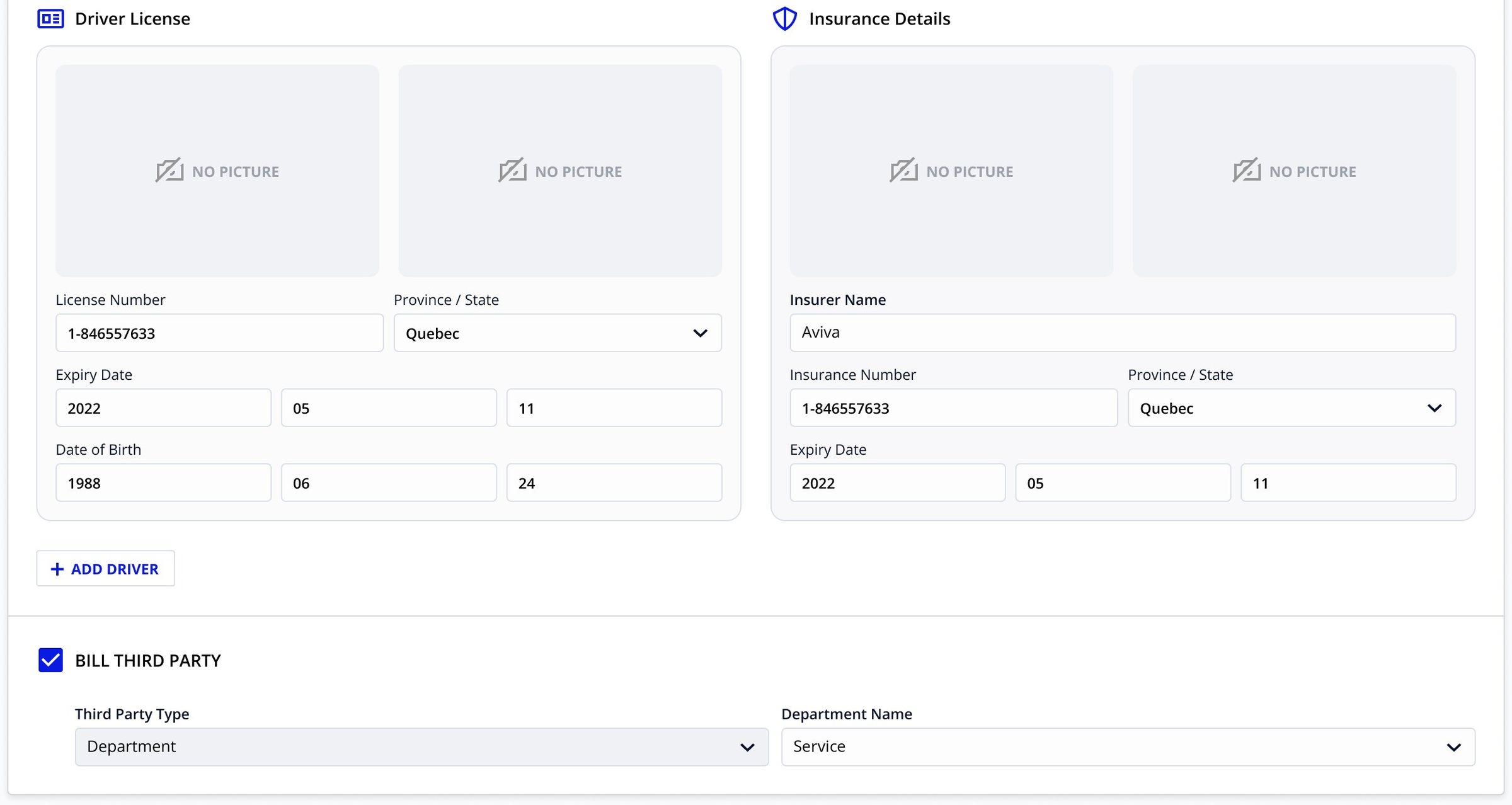
Bill to, mid 2025: the agreement charged to a department or a third party.
The same year, self check-in was refreshed. The customer fills in personal information, driver’s license, a second driver, insurance, a card for the deposit and rental options, and details can also come in from the dealership’s management system.
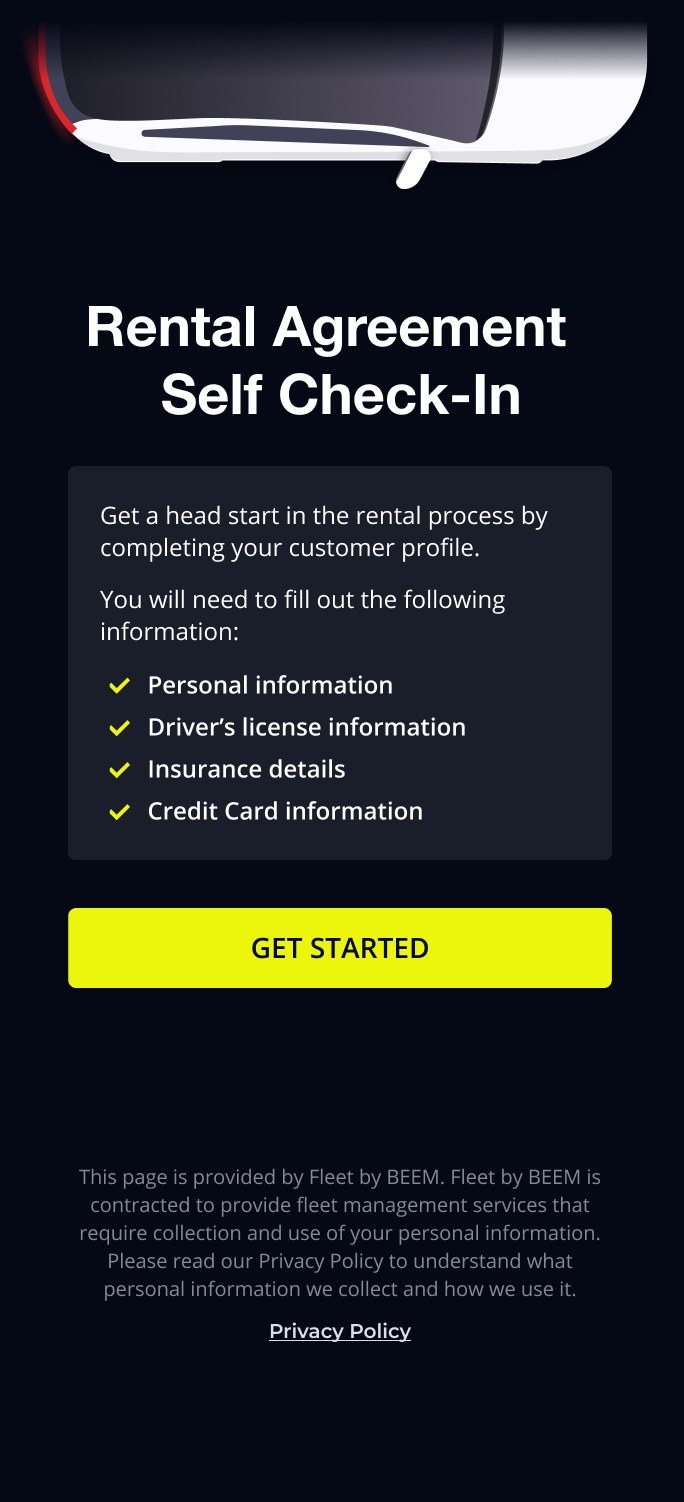
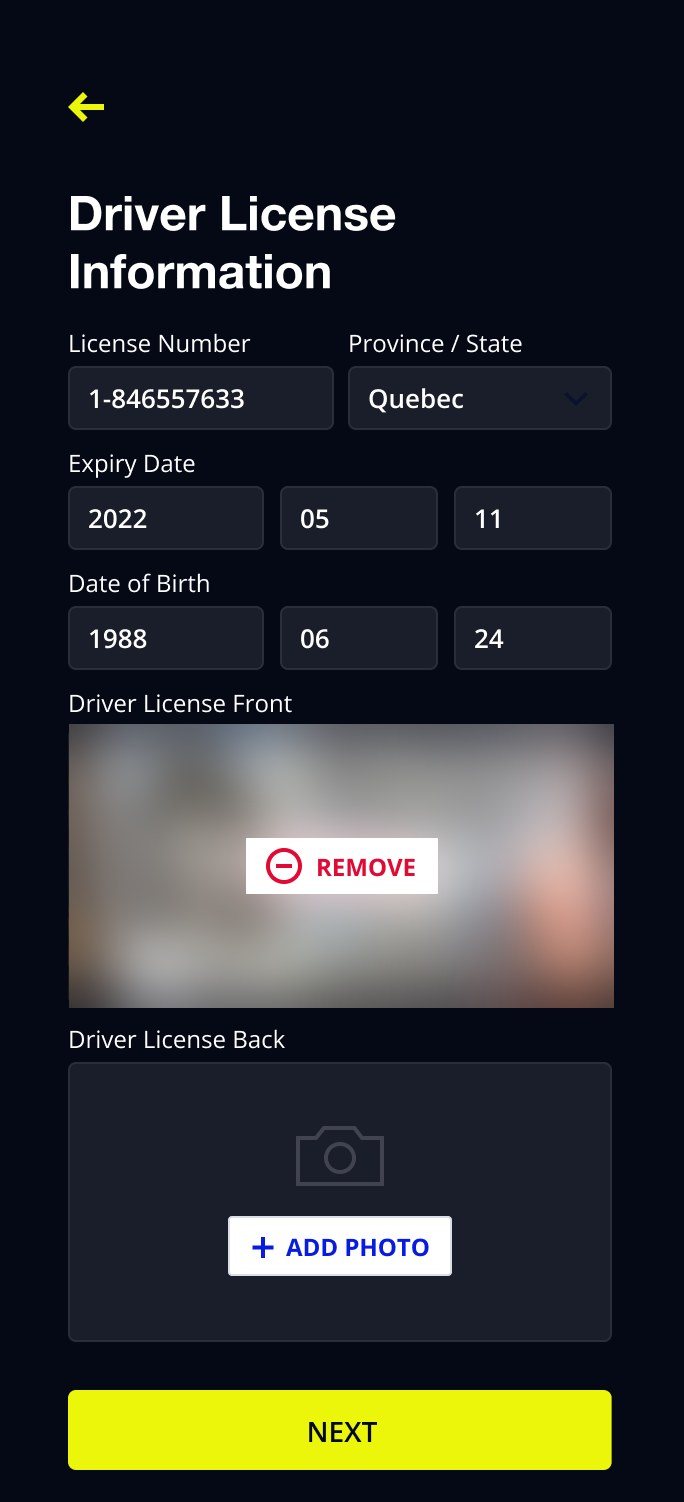
The 2025 self check-in: the overview, and the driver’s license step.

Opening an agreement went from about 3 minutes to about 30 seconds. Rental transaction volume doubled with e-signatures and in-app payments, and dealerships recovered up to $177 per vehicle per month that used to go uncollected. Contactless check-in and payments came up when TSD acquired Fleetlane.
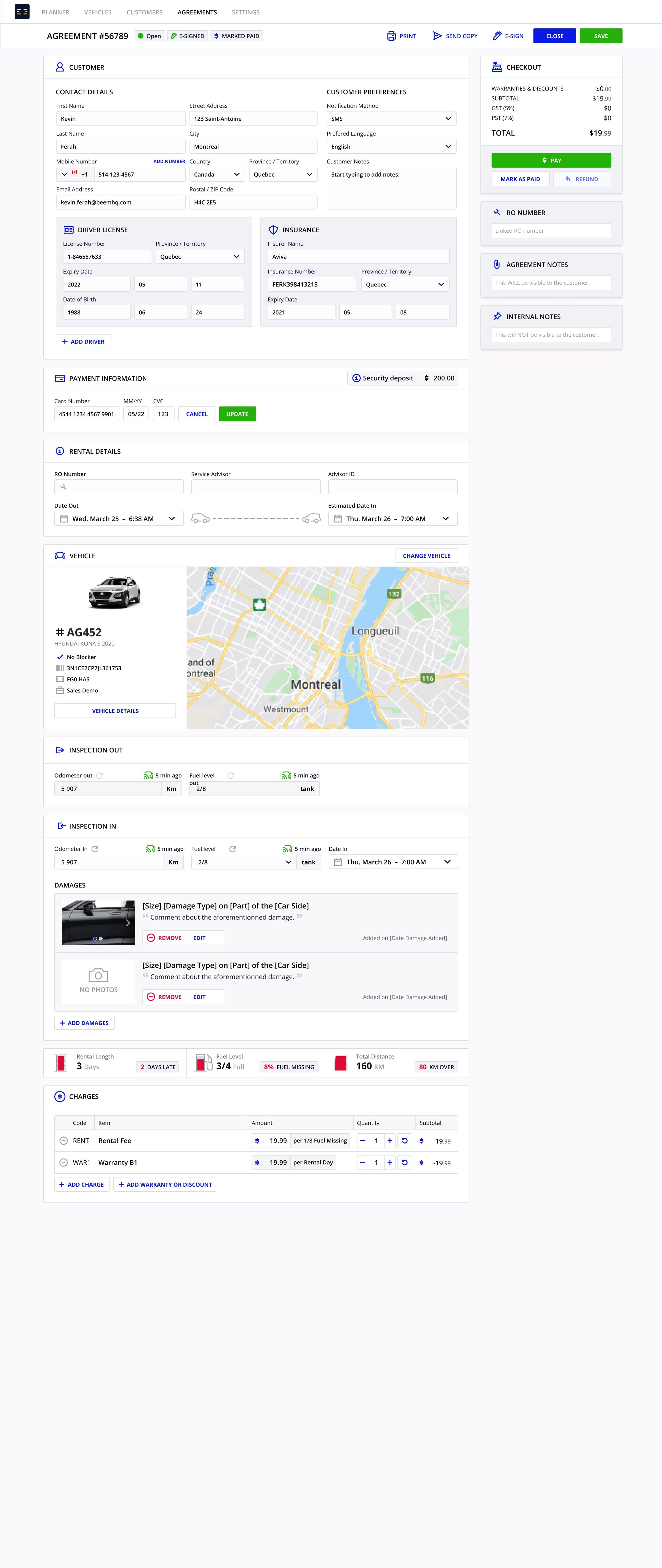
Where it ended: the redesigned agreement, with checkout in the right column next to the charges.
The idea behind the work
The counter is where keys change hands.
The customer does their part before they arrive and after they leave. And the agreement is where the money gets settled: charges come from what happened to the car, and paying is the last step of returning it.

I set the product vision and decided which features to build, as Fleetlane grew from about 35 dealerships to 250+.
When COVID hit, I moved e-signatures and self check-in to the top of the roadmap. Both shipped in 2020.

I pushed to make payments part of the product.
Rental transaction volume doubled.

I worked directly with the sales team on calls, demos and the pitch, so what dealers asked for fed straight into the roadmap.

Dealership visits, shadowing service advisors, remote interviews, and input from sales and support.

Design the no from day one
I’d have designed the declined path in the first version instead of four years in.

Build the ledger first
Every payment question we answered later came down to knowing every transaction on an agreement.
Credits: Fleetlane’s designers, the engineering team, and the sales and support teams who brought dealers’ problems back to us.